Showing posts with label reviews. Show all posts

Sunday, July 14, 2013

REVIEWZ (of Movies!) | Pacific Rim (2013)

Directed by Guillermo Del Toro
Screenplay by Travis Beacham & Guillermo Del Toro
Starring Charlie Hunnam, Rinko Kikuchi & Idris Elba
Produced by Legendary Pictures
I was twelve years old again for approximately two hours.

Like the Jaegers and Kaiju that compose of this film, Pacific Rim puts its heart on its sleeve right out of the gate, and dares you not to smile, at least a little bit, and think, 

"Alright, this is pretty fucking awesome."

Wednesday, July 3, 2013

R3VEWWz (of Video Games!) | The Last of U... Damn, man.

"We're shitty people, Joel. It's been that way for a long time." 
Developer: Naughty Dog
Creative Director: Neil Druckmann
Game Director: Bruce Straley
Lead Designer: Jacob Minkoff

There's not much to say about this thing that hasn't been said already. I'm only saying those things that everybody's been saying because you don't finish playing a game like this and have nothing to say about it.

That being said, the ending of this game left me pretty speechless.

Rightfully so. The folks that brought us the Uncharted series, with each installment pushing the "games as art" debate into more mixed, ambiguous and dangerously arguable territory with its state-of-the-art cinematic ability at the time. 

No question here, that if Uncharted 1 through 3 were a testing grounds of how to push gaming technology towards untapped potential, The Last of Us is a product of that endeavor. 

Game mechanics, level design, art, UI, AI, multiplayer, DLC, content distribution, back-end, front-end, and all that other crap - yes, that's the bones of any video game anybody's ever made, from Candy Crush Saga to Heavy Rain

They're the innate bread and butter. Without one or the other, it's not a game. At least Metacritic won't say it's a good one. So what do players look for in a good game? What's missing from the bread and butter? It's not rocket science.

It's called storytelling. 

Saturday, December 1, 2012

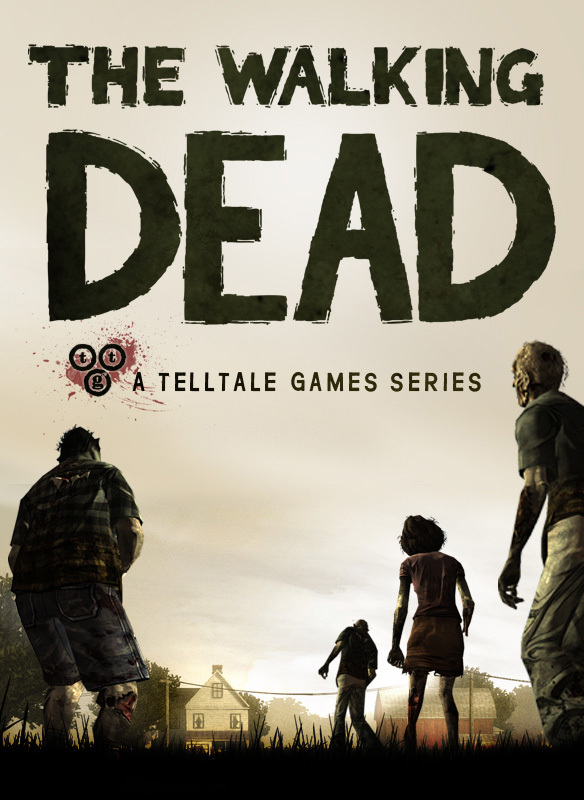
REVIEWS! (of Video Games) | The Walking Dead


 Developer: Telltale Games
Lead Designers: Jake Rodkin & Sean Vanaman
Platforms: iOS, PC, Playstation 3, Xbox 360 

It's been three days since I finished the final episode, No Time Left, of the five-part episodic zombie survival series. Several times throughout those three days, I have become deeply troubled because I kept thinking about this game. I ate a clementine today, which only made it that much harder to swallow. I realized early on that this was the only game to forge such a strong connection with me, deeper than just a superficial desire to play it out of enjoyment. I kept playing this game not because of it's fun factor, because frankly there is no such instance in any of the five episodes out there where fun is ever factored in. You play it because you have to. Like finishing each episode, getting to the end, and sacrificing everything with the choices you make is the only possible thing you can do. 

This is a game that will be discussed in online forums, lecture halls, and gaming websites for a long time. From a developer that's been in the down-low for quite some time, known for several sub-par games (Back to the Future? Wut?), and some memorable ones (Sam & Max), Telltale surprised absolutely everyone when the first few episodes rolled out. Because it just kept getting better. And rawer. And unbareably addicting. What this video game has done for the industry, it is not something to be ignored. 

It is a revolutionary gaming experience. Here's why:

THE STORY

By far, the greatest virtue of The Walking Dead's offering to its players. This is a compelling, loyal story to the source material, and yet it offers something completely new -- it takes advantage of the medium that its produced on. The wise choice to make a new narrative set in the same universe opened up an entire new canvas of possibilities, and the writing team took advantage of it, by the spades.

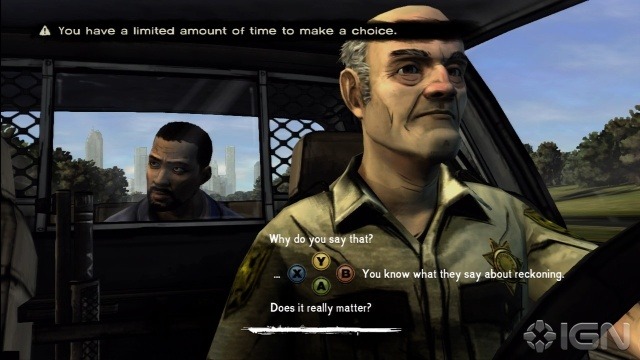
Set right at Day 1 of the zombie epidemic, instead of watching Rick Grimes in comatose in a Georgia hospital, we follow Lee Everett, a college professor stuck in the back of a squad car, on his way out of the city. The slate is clean. We know nothing about this guy. But at the end of No Time Left, the tether between character and player, avatar and human, it's closer than most games can ever hope to achieve. 
 
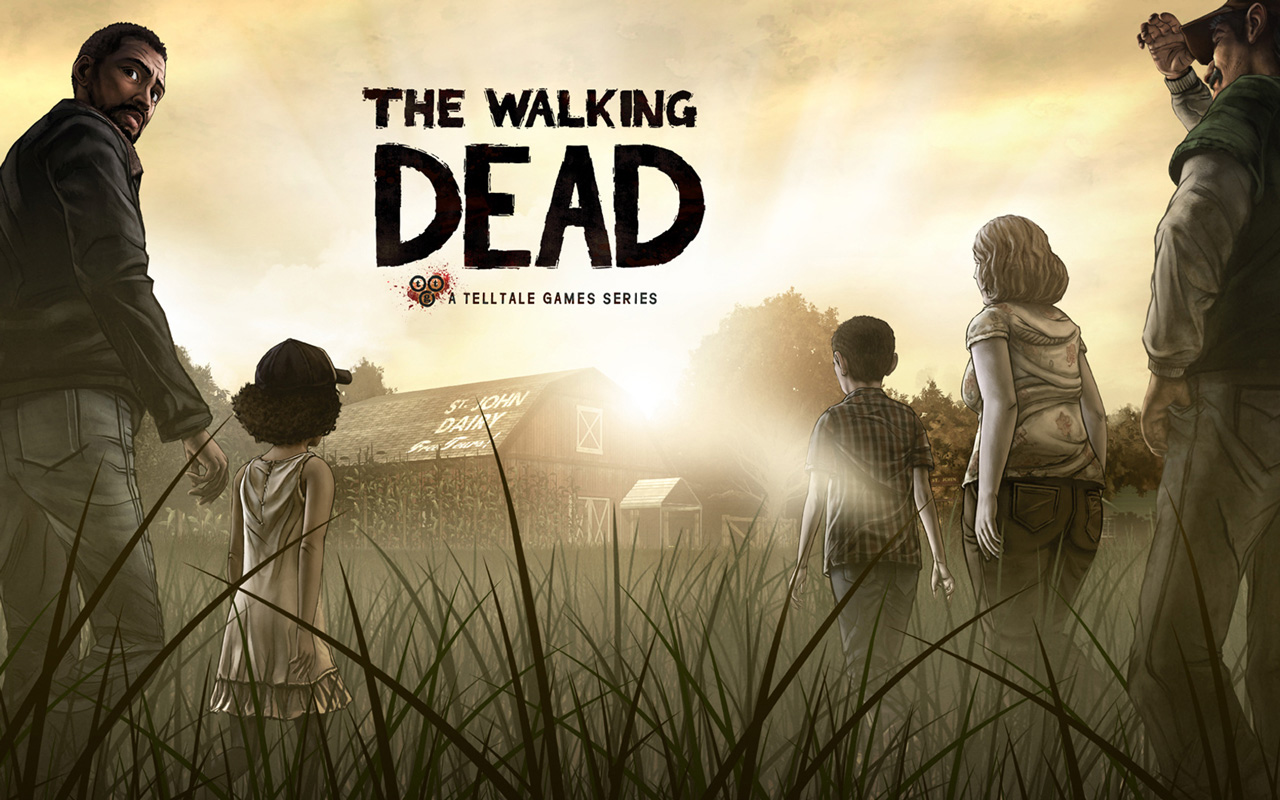
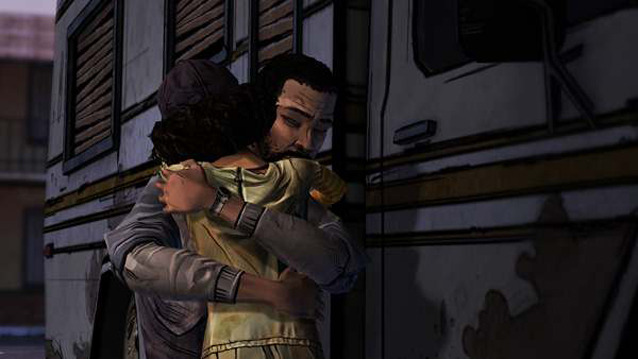
The second central character, Clementine, is the lifeblood of this series. She is the core -- Lee might be the player's avatar, the main influencing factor within the game's story, but Clementine is cleverly constructed to be absolutely everything to the player -- the core, the goal, the emotional center. From Episode 1 through to Episode 5, Telltale's story team has been able to strengthen and reinforce that notion with each single dialogue choice for Lee. And her presence just drives the motivation to finish the game, however you're playing it. The amount of investment we put into this nine-year old girl is through the roof. I furiously clicked my mouse button if any zombie or human went anywhere near her -- I felt genuine anger when her life was threatened, and I wanted to hug her to death myself whenever she was sad. One of the best non-player characters in gaming history, and definitely the most deftly-written, organic and complex child characters in any story I've ever read, played, or watched. 

Each episode deals with a chapter in Lee and Clemetine's trials for survival, from the original survivor group of Episode 1 in the drugstore, switching to the motor inn, down to the dairy and eventually into Savannah in the hopes of sustaining Clementine's search of her parents -- its a mirroring of the comics that works so ubiquitously that there is no detachment from the structure of the story. It takes the context of both the comics and the television show, and imparts its own elements, given by the nature of the video game medium, and molds those mechanics to serve the story. The separation of these chapters are natural, gripping cliffhangers. And The Walking Dead is nothing without character deaths -- and they come a-plenty. They are all left-field. They all made me gasp, sometimes yell. They are all heart-breaking in some way or another. There is no extra air being wasted -- all these characters have a part to play, and they're all essential to the story; of course, this being a game structured around player choices and their effects on characters, that's a necessity. And nicely done it was.
Walking Dead screenshot There was never a point in the game where I stepped out of the story. The immersion was deep and satisfying, emotionally draining because of the subject matter, and relentlessly manipulative. Players never get away with a story choice that won't have consequence later on. The 'hints' to notify the player that an NPC will 'remember' certain things -- that's the tease that gives the added tension of the gameplay mechanic. But story-wise, it's an incredible achievement for this amount of immersion to come from a point-and-click adventure, and I truly think its because every element of this game's development has always served the story. By the fourth and fifth episodes, Telltale had mastered that to the tee. And the result was an ending sequence that collectively punched every player right in the feels.

The best part about this story? It wouldn't work in any other medium. It is distinctly a product of its constraints and its opportunities set by the nature of the video game. The interactive storytelling, the branching character outcomes, the poignancy of player choice -- all gone if you transpose or adapt it into another environment. Like the comic takes advantage of the ever-lasting storyline, or the show takes advantage of the power moving images can do for a story, the game puts all its cards on the table.

THE GAMEPLAY


The technical aspects is where a lot of critics would have had parts to nit-pick, but it all becomes moot by the further episodes, where Telltale really figured out how to handle their limitations in an effective and terse way. Using the repertoire they had, they turned simplicity into a complex player-centered experience. The playing of a point-and-click adventure has that level of nostalgia that early gamers in the 90's love, but there was never a Walking Dead kind of brooding storyline to accompany it. What do you do to mesh the two together?

A lot of the studies coming in about why exactly the game is just so good keeps coming back to the decision mechanics of the player. The dialogue options, and the dialogue itself, is the core of the gameplay here. The adventure elements of searching for interactive parts of the levels, or the short action sequences are always there as effects of the initial choices that players make, through these instances where they must make a choice to decide the direction that Lee and Clementine should take.
 
Rooting them in the themes of the game, instead of the progression towards a goal, is how Telltale solved the point-and-click risks. Each dialogue option represents a way to respond to characters that would change their disposition or attitudes towards Lee. The player being in control of these decisions places a unique kind of responsibility in their hands -- not like an sandbox shooter, or a platformer, where the level of detachment is clear and accepted. The Walking Dead is an intimate, personal experience. The detachment instead comes in the form of control. The pre-ordained selections for dialogue are going to be Lee's thoughts, players choose the kind of Lee they feel is the right one for the job. So, players maybe aren't in the shoes of Lee Everett, but are responsible for constructing his attitudes. That sense of responsibility towards a character drives the gameplay.

Everything branches from the choices. The emphasis on full-circle, karmatic foreshadowing help hammer that down for the player. And without a doubt, it becomes one of its central themes - and also it's one of the themes of both comic and television show. Gameplay serving story.

Most of all, it's simple. Icons to represent points of interaction. Four directions of movement within an environment. Optional hints. Everything designed to minimize the focus of the player's attention on what they're doing, but rather, why they should do something.

THE DESIGN


 Aesthetically, the stylized, comic-book art design of the game is the best choice Telltale made right from the starting gate. Importing that connection with the comic book universe not only settled down antsy comic book fans, but it aided the construction of that universe tenfold. It just looks straight out f the pages. Immersion factor multiplies quickly. The gore is so prevalent, but it's never over-the-top, never kitschy or silly. The raw and the grit is there, not in the detail, but the atmospheres and the soundtracks and the colours. Complexity hidden under simplicity is a running visual theme here. The faces emote so well for stylized faces, but the expressions are heightened by the weight of everything that's going on.


The sound design obviously gives the dimension it needs. Jared Emerson-Johnson's sombre and ominous background score punctuates just about every major decision with a melody that, on cue, will bring you back to those fateful decision in a heartbeat. By Episode 5, it's a cue for waterworks.  


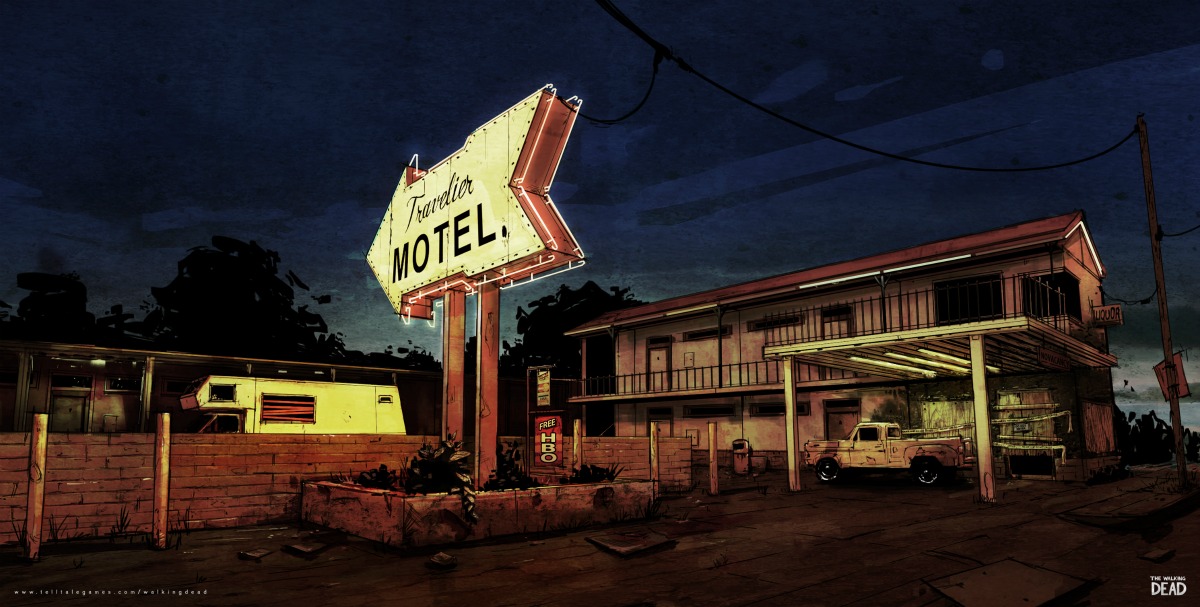
The locations are fittingly TWD-esque. The drugstore - enclosed, encapsulated, a boiling pot for tension, waiting to fall down. The motel is wider, but way more dreadful. Dilapidated and tired - just like its characters. The dairy farm's idyllic falsehood represents just that -- there is no safe haven from what they're experiencing. The train is a much more direct thematic connection to the story, and it has a lot of good story moments. Pushing forward to the end, full steam. Until Savannah, with the sewer system, Crawford, and the mansion, it's a variety of locations to evoke a variety of moods and feelings, with all the characters running amok between them, the sense of evolution and emotional progression is supported by steel-thick design and aesthetics that augment just about everything.

THE VERDICT. 

Game of the Year for 2012, it should win all the awards. Just the context of having a second-rate, pseudo-indie developer come out with this gem, it's a direct display of story overpowering flare, sales revenues, marketing prowess, or franchise profitability. Just tell a fucking good story, and keep that goal with every artistic, technical or gameplay choice, and you'll have an amazing game.

In a way, this is the best fan-fiction in the world. The collaborative nature is undeniable - players themselves get to impart their own thinking into the outcome, sort of, of how Lee and Clementine end up. The developers took everything they knew about The Walking Dead, and kept their vision sound and loyal.

Buy this game, if you've never played games before. It's simple to understand and unbelievably addicting from the first 10 minutes in. If you're gamer, play this game because it's not like any other game you've ever played. If you're a person, play this game because having the chance to feel this kind of emotion from fake people gives you a refreshing break from the simplicity of real life.


The Walking Dead will make you feel alive with conviction and motivation. Play it, and you'll know why.

Friday, November 9, 2012

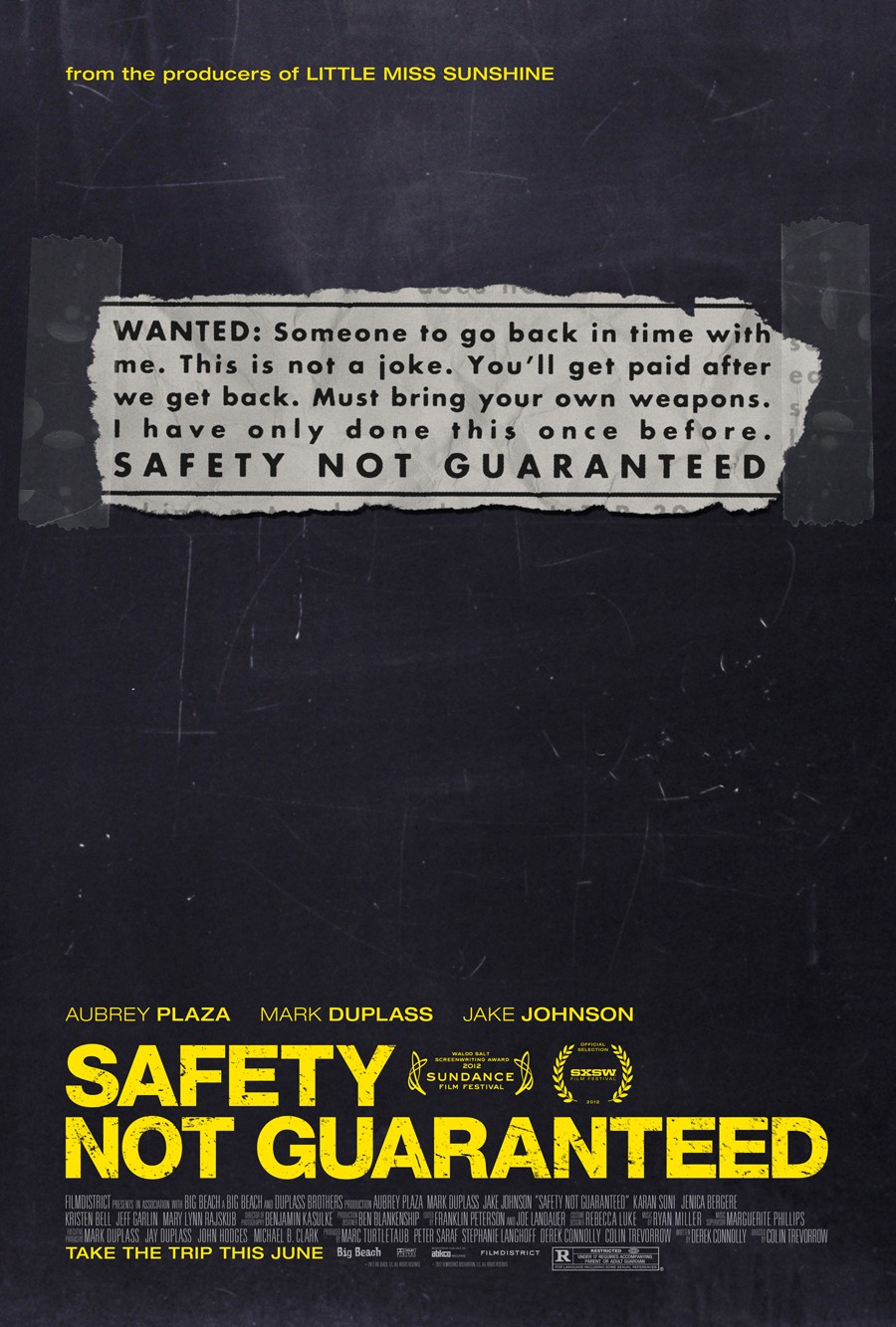
R3VIEZWs!! (of Movies) | Safety Not Guaranteed (2012)

Directed by Colin Trevorrow
Written by Derek Connolly 
Starring Aubrey Plaza, Mark Duplass, Jake Johnson & Karan Soni

THE RUNDOWN  

  • A Festival Entree
  • Anti-Typecasting Gem 
  • Disparate genres working like glue
  • An indie filmmaker's indie film
THE BASICS

"From the producers of Little Miss Sunshine - When an unusual classified ad inspires three cynical Seattle magazine employees to look for the story behind it, they discover a mysterious eccentric named Kenneth, a likable but paranoid supermarket clerk, who believes he's solved the riddle of time travel and intends to depart again soon. Together, they embark on a hilarious, smart, and unexpectedly heartfelt journey that reveals how far believing can take you."

THE BASES

I've already watched this film twice this week. The first watch was complete immersion and emphatic bliss. The second was a deep appreciation for the process by which this film executed its thematic premise, and each of the cogs of the machine that helped pave the way for its well-deserved critical acclaim and Connolly's warm reception at this year's Sundance Film Festival, where he took how the Screenwriting Award for his work on this movie.

There are few movies out there that have truly, "something for everyone". Any movie needs that target audience, and banks on the formulas and story beats that ensure a proftiable turn out for that said audience. We're talking Hollywood machine here -- indie films have it better and worse. The creative control gives you a sandbox of opportunity to play and create. The limited budgets and unreliability (and probably consistently crippling doubt of one's own capabilities) is a necessary trade-off. But if, by divine intervention, the stars align, a movie like Safety Not Guaranteed is the result.

First off, the casting: As director Colin Trevorrow and producer/actor Mark Duplass have stated in multiple interviews, this was before Parks and Recreation had started its legs and skyrocketed Aubrey Plaza and her enigma of a personality into a net-generation sensation. And this was before New Girl even existed for Jake Johnson to be wooed by a huge fanbase. Good thing they did, because they for sure noticed the acting chops these two had. And Mark Duplass' expansive career as just a filmdoer (producer, director, writer, actor) helped in it as well -- and probably his character is the most impressive part of this whole endeavour. But these main guys, including the introduction of Karan Soni -- which again, kudos to the casting director for making such conscious and effective choices in the retrospect -- make this movie bounce off the screen and into your heart. For reals.

The story ties directly into these performances: Connolly has written one of the slickest scripts I've seen on screen. In terms of handling the romance of these characters, it's an onion. Layers on layers. Mark Duplass's character, Kenneth Calloway, screams off the page as this guy who could possibly be the most ridiculous fellow and push this movie into slapstick territory, but as directors and producers have stated in several interviews, Duplass managed to ground him in an honest humanity that captivates you the more screentime happens. Conolly crafted him as the tonal core of the film, and seeing all three characters orbit around him is such a fulfilling experience come the end of the film.

The best movies have recognizable and relevant themes to them, but they're not shoved up into the surface. They float below the water, and you need to change perspectives to actually catch a glimpse of what lies underneath (like a shark. Fuck yeah, sharks). And this is a film that forces you to change perspectives, look at things differently and, if it's possible, take a step back and be aware of that change going on. Connolly does that, in my opinion. And the result? Feels.

This is a story about believing, about the importance and power it can have over someone. It's about what we look at in ourselves when we see our past, our present, and our future. It's about regret, love, and loss. It has some amazing monologues that hit home, universally, and some amazingly funny scenes of physical comedy. The dialogue is razor sharp with wit and spark. These performances heighten everything about what was written. And let's get to the visuals of these brilliant peace:

THE BRASS TACKS

The film was shot on-location in Washington State, and after signing on to be cast, Duplass became executive producer and connected the crew to names he knew in Seattle. As a result, the first half of the film becomes the style I like to call "cinematic tourism" in the cinematographic sense. Static shots of obscure, tacky, tourist-y locations. The Ocean View location gives the film a calmness to it that never takes away from the energy happening over top of it. The forests and horizons are just visual treats you can't get enough of. Put a very pretty Aubrey Plaza in it, sassed up in costume design that got my roommate quite hot and bothered (can't say I didn't either), and you have some bonafide wallpaper material. It's a visual tribute for Seattle -- a noble goal indeed.

It's all slow edits, graceful pacing, and then bouts of innocent energy supported by the characters and the quirkiness of their actions. If you find this explanation pretentious, then go test it out for yourself, and see if you can find a better description of it. The visuals reflect the interior changes going on in each of these characters, and I love how seamlessly the film juggles around the dramatic changes going on in each of our characters' lives. They're intertwined so well, the satisfaction factor is high come the final act.

The original score, supplied by Ryan Miller has that emphasis on subtle energy as well, with up-beat acoustics accompanying the plot most of the way. The action-y scenes even require that touch of sincerity that keeps it away from the fine line of goofballness it could have crossed. Again, costume design worked very well to exemplify these personalities, from Jeff's wearing farm-plaid to fit in with his former high-school girlfriend's lifestyle, to Plaza's all-purpose grey toque -- not to mention Kenneth's mullet and jean jacket -- give those bursts of character right from the get-go. The production design was ubiquitous, always sitting away from the spotlight to let camera and character play within. All tools to make a great sculpture. All sucessfully pulled off.

Aubrey Plaza stars as Darius Britt in Safety Not Guaranteed (2012)THE TAKE-AWAY

Sundance loves this shit -- it was made for that festival. There's so much there for the indie crowd, and it's not conceited in any way, that's just the nature of the film's style and tone. For a beyond-modest budget of under a million, what else can you expect? These were stars-in-the-making, unknown of their talent, committing to a strong, unexpected stoy (with a taste of reality in it, making it all the more awesome). A director and writer team with film-school comraraderie and trust (NYU Grads). Watch this film for its theme, its story, or its characters. They're all winners.  You'll cry. You'll laugh. You'll hold your heart out for them. Movies like this?

They're why I love movies.

Monday, November 5, 2012

R3VI3WZ!! (of Comics) | Saga Vol. 1

Written by Brian K. Vaughn, Art by Fiona Staples
 THE RUNDOWN
  • Space is a big, scary place.
  • Human-Animal combination animels are the best kind
  • FEMALE ARTIST.
  • Concept, you're doing it right!
Comic books are a weird thing, it's so much series to create a new kind of story, an original set piece that could be inspired by different predecessors or contemporaries, but ultimately a creator is making a new kind of story to introduce into the plethora of content saturating the modern comic book market.

And yet, with the power of the Big Two driving most of comic book sales, we have cross-overs, team-ups, cameos, company-wide events, relaunches, reboots, ret-cons, and a ton of other tactics to keep these ninety-year old franchises alive. Well, cause they have too -- there is no world without Superman or Spider-Man (just accept it).

So when a guy like Brian K. Vaughn comes along, or a guy like Robert Kirkman, hash out crazy successful series like Y: The Last Man and The Walking Dead, it's a blessing. Image itself has become one of the indie publishers that get right into the new content to tell audiences, which I am so glad for. Today, there's even more presence of original series not associated with preconceived franchises than ever before. It's such a breath of fresh air for comic book fans. And here's where a story like Saga comes into play.

Vaughn's second big project with artist Fiona Staples is a space epic set against the backdrop of inter-planetary war, though it's technically not, between a planet and one of its moons -- both civilizations are locked in conflict that is heated and never-ending. Unless, a solider on one side and a prisoner on the other end up falling in love and having a kid -- then things get complicated.

The premise of Saga itself is a complicated and nuanced experience. There's a huge reliance on close, human themes amidst an insanely high-concept story world. There's robots, bounty hunters, royalty, secret agencies, magic, wings, horns, and a mixture of genres that dips its toes into everything it can. And it comes out a cohesive read. Brian K Vaughn's conceptual ability is something to be marveled at, and without a doubt, respected.

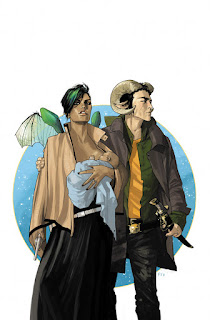
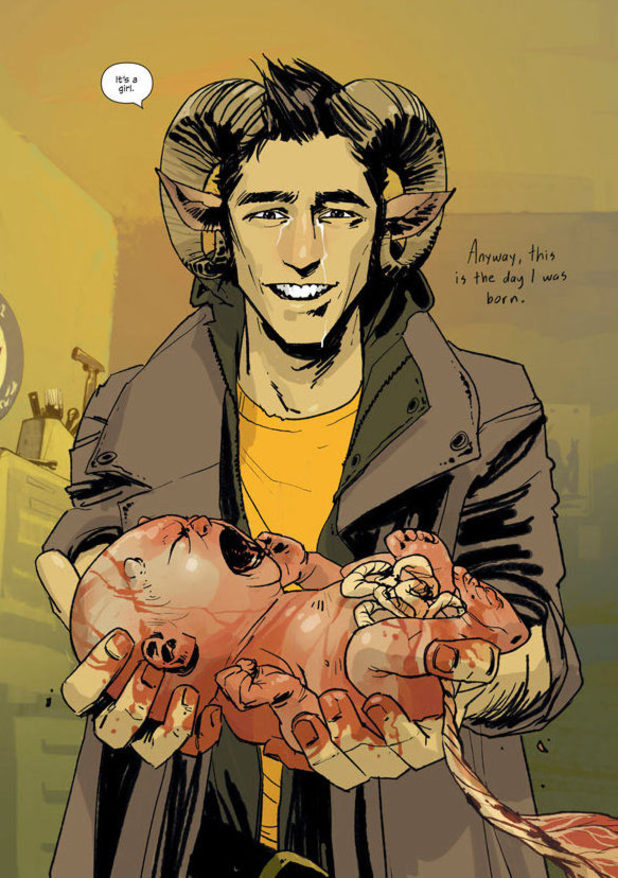
He ties it together with two central characters that jump off the page immediately -- from panel one. Strong characters are a glue that can hold even the craziest concepts together, and the read gets only more enjoyable form there. Alana and Marko are two backstories that couldn't create more inherent drama even before hearing and seeing them -- they are the proverbial 'star-crossed lovers', only one is feisty as hell and has insect wings on her back, and the other his a horn-bearing magic-wielder who gets into fits of rage when those he loves are put in danger.

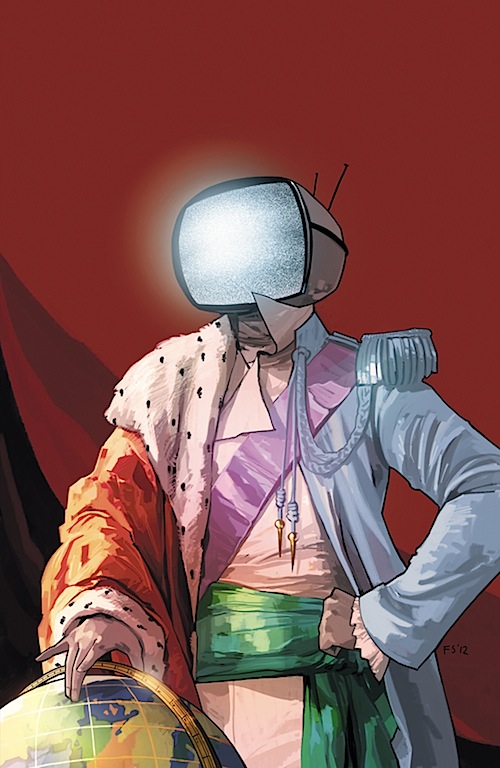
If anything, read this book for the cast alone. I love how Vaughn and Staples have gone the route of character designing these foreign worlds in the human form, not only to bring the themes into more relatable territory, but it's just refreshing to see a unique take (ironically, consideirng they're more human than alien) of extraterrestials. It places the plotline in a weird place with these almost-human characters encountering noticably more alien experiences. But a supporting cast of weird-ass bounty hunters and robots with television screens for heads just adds to the intensity of Vaughn's world.

BRASS TACKS: THE VISUALS

Fiona Staples is quickly becoming one of my favourite comic book artists. The fluidity of her linework and how casual it all comes together, not to mention doing the coloring for the first volume as well, is a huge selling point. One could demand a visually overwhelming, double-page spread kind of sci-fi book to boast the story world Vaughn's created, but Staples kind of goes in another direction.

All of it's loose and light, and yet it still jumps off the page. But when those spreads do come, Staples manages to piece together some outstanding images that stick in your mind long after you've turned the page. Her command of movement and pacing in those key action sequences -- trying to wrap your head around armed battle mixed with medieval-style magic in one page is pretty damn hard. But for me, I was stuck on certain pages, finding detail that I would have missed if I didn't browse the goods. And there are a lot.

The last thing that should sell you on this book if nothing else, is Staple's cover art. Of this particular volume, it's just beautifully designed. Simple as that. It puts Vaughn's incredible characters in the centre to pique the reader's interest, and the title and background give enough hint to what a reader can expect. And it's just super pretty too look at.

Note: Female artists in the comic book industry deserve this kind of recognition. Cause they're out there and comic book fans have to motivate more female artists to try it in the industry. It's been long enough that we've either unintentionally, or more disappointing, intentionally ostracized an entire potential audience. Support female comic book artists and writers!

THE VERDICT

The price tag on this awesome book is a measley $9.99 at your bookstore or comic book store. This isn't even a debate. Vaughn and Staples are sacrificing the revenue stream for more of a readership motivated to pick up a brand new property from an independent creative team. This is the definition of bang-for-your-buck. The story is fresh, it's rejuvinating and it captures you from page one. The art is pristine and flows in sync with the storytelling extremely well. The story world is one to marvel at. And it's only $10. Go get it, read it, and follow this book because it's going to blow up very soon.


Monday, June 18, 2012

Reviews!! (of Movies) | Real Steel (2011)

Directed by Shawn Levy
Written by John Gatins
Based on the short story "Steel" by Richard Matheson


Let me start it off with this: I wish I watched this movie in theatres, I probably would have cried. This film is pretty Hollywood, it's got the flare and flavour--but more surprisingly, especially to me, it's got some pretty solid substance to it.


The turns are expected and it's easy pickings on the critical side if you're a fan of being pulled completely off-guard. But hey, movie goers aren't hard-ass pretentious intelligencia so this film pushes all the right buttons for me. Wanna know why? More after the jump!

Sunday, June 10, 2012

Reviews! (of Movies) | Prometheus (2012)

Directed by Ridley Scott
Written by Jon Spaihts & Damon Lindelof


This one was on my list for a while for the must-see summer movies. Even a prospect of an in-universe Alien prequel dumbfounded me when the initial rumours came out -- personally, I'd have no idea how to start or where to begin with broadening the story more so than it should.

But, this is a Ridley Scott film, so it's got some expectations. And it's his core universe, through and through, so I had ample faith that whatever it was, they'd be able to pull it off. The ultimate outcome? They had all the pieces there, and the slate was clean, and the puzzle was put together well. It just didn't shine as much as I think it could have.

Does that mean the film didn't shine (in a tense, brooding and horrific sort of way)? Not at all. The film's great, I think more as a stand-alone than and outright prequel in-universe with the trilogy, and maybe even all those ridiculous AvP movies that are actually included in the canon. Which is actually kind of awesome. But to that point, this movie carries the weight of the three before it and puts it all over. Has a patch on its shoulder parading it around throughout the film, like it wants to be established as the next saga in the stories to tell about the universe.

But that note I feel was misplaced. It kinda skewed the purposes of this movie for me. My main gripe is that I didn't really feel like it knew what it wanted to be. I'm talking about it as if it's a five-year-old child that's confused about life because it may be a little premature. If it had another year of pre-production, brought in some story consultants, could this have been a pit full of terrifying awesome? More after the jump.


Saturday, May 26, 2012

!!SWEIVER (of Comics) | Justice League Dark #9

Fuck science.
Written by: Jeff Lemire
Art by: Mikel Janin
Colors by: Ulises Arreola
Cover: Ryan Sook (his covers rock)

THE BASICS:


- Fresh start, fresh team.

- Snarky lead character = fun.

- B-Listers everywhere, and they rule.

- First layers being peeled back to...

- Something pretty big.

RUNDOWN:


I've been picking up weekly issues of Justice League Dark since #1, and more than once I've been back and forth of whether to drop it when some of the weaker stuff was released under Peter Milligan's writing. But Milligan had a decent run with the cast of characters. When you throw in magic-based heroes into a team book, the chances are there's going to be some uniqueness by default to the kinds of stories that you can tell. DC's huge focus now, on tying every ongoing series into another one, made Milligan's run a bit cluttered in the later issues (never picked up I, Vampire after its #1, though I continue to hear good things).

#9 is a fresh start with Jeff Lemire at the helm the writing chair, and coming off Animal Man already been proven to be consistently amazing, I was stoked for this issue to bring back some flavour to the cast where I felt Milligan ended up dragging down as he did his run (but a good finish with #8). Lemire hits the ground running, and wastes no time changing the series' attitude and ton as a whole (definite visual cues to Indiana Jones). The tone's a bit brighter, a bit more adventurous rather than the previous doom-and-gloom, horror-style plot. The biggest plus here is how he handles Constantine's characterization. The snark is there, it's clear, and its wonderfully played off of from everyone that Constantine talks too. A clear lead is established, which is great. 

There's really only one new addition, and a nice cameo too that shows DC's devotion of their long-term plans on how this entire universe, magic-based and the bigger one both, will be important in the future (if you picked DC's New 52 issue on Free Comic Book Day). This issue has the virtue of being a fresh start after the 'testing phase' of how to handle this "Dark" line of books, and the feeling of having no time wasted in connecting the necessary dots makes for a swift, fun, and fast read.

The villain for this issue, Felix Faust, gets a nice revamp, and how Lemire incorporates the obscurity of the magical aspect of the DC Universe gives me a feeling that his run is going to be a window into how expansive this branch of the larger world we can get -- great for new readers, and fun for guys like me who scrounge DC's wikia for all information about the most obscure heroes and villains.

Hitting the ground running was a key part in making his book work -- Lemire's got a good sense of where this story is going, and as a result, these characters work together better than I think Milligan wanted to get them across as. The aspect of 'reluctant non-team guys' felt hammered by the fifth or six issue for me -- this time, I'd rather see them working as a team, but they still get to keep that dysfunctionality as a collective personality quirk. Which is neat. For me at least.

BRASS TACKS


Mikel Janin is what caught my eye initially about the JLD. Wouldn't call it photo-realism, but that style he has is noticeable and eye-catching. From issue to issue, the detail he puts into facial expressions and textures, including the bold pencilling which is a neat contrast with the naturalistic features, is a great reason to come back. Yet, I feel like it'd be the sort of style to get Greg Land-ian criticisms of tracing photo references and the such, but fuck those people.

For this issue, I don't know if its colorist Ulises Arreola that's bringing something new to the table, but Janin's art's been tweaked just a bit to make a noticeable change to those wh-o've been following. But for new readers, it's the same reliably details and rich Janin artwork. Distinct characters are drawn with care and clear separation of personalities is reflected in each of these guys. Constantine's expressions alone are always a reassuring sight, there's probably ten little different ways he lights a cigarette between #1 and this issue.

Another bonus is how he takes Black Orchid and Andrew Bennet as new characters, and I especially like Bennet's transformation into his other form (go read I, Vampire, it's pretty good). I'm a sucker for cool character designs, and I love the visual take on Orchid's shape-shifting. It's the little nuances in detailing that Janin, and artists in the vein of his style, give for readers. Definitely worth another read just to scan the panels for the little things. 

Combined with a fresh writing direction, a polished tweak on how Janin's drawing it to reflect Lemire's story-- it's a bit rougher, sketchier overall--is something I'm thumbs up for.

TAKEAWAYS:


A great starter book for returning readers, or new ones who just want another Jeff Lemire book in their collection. While not amazeballs brilliant, it's swift exposition to set up a grander story, some delicately played-out magical combat and montage action that makes it fun and exciting. Magic lovers rejoice, there's new spice in the life of John Constantine and company. 

Lots of backstory, lots of speculation, and a shit-ton of sorcery. And a great cast of characters that have a lot that can be played with, especially in this creative team's hands. Can't wait to see how the team incorporates more magic heroes (cause there's a ton). Gonna get stoked for what's to come.

Sunday, February 19, 2012

TRACKS W/ CLASS | Macklemore – The End

Could be a follow up to the former Aurally Audacious Endeavours, could be an accompaniment, could be its own thing.

Tracks W/ Class points out tracks that you should be listening to, and would benefit your musical experience and hopefully bring you into another territory of music that you wouldn’t have journeyed into otherwise. If you have, then good job.

If not, then let’s start with Macklemore.

THE ARTIST

image

The Seattle rapper has been traversing the mid-fame rap scene and especially around hip-hop blogospheres. While he’s a star in his hometown, he only recently did some concerts north of the border, and I hope his fanbase grows because he offers something that most other rappers don’t offer: meaning.

Mainstream hip-hop has depressingly become easy to decipher into three categories of subject matter: drugs, money, and getting women. That’s not even a stereotype, probably any producer will tell an artist that to reach Top 40 charts, you’d have to manufacture a bubble-gum beat and throw two or three lines of lyrics about any of the above, and repeat until squeaky clean.

What does Macklemore do? He tells stories about drug addiction; succumbing to it, overcoming it, suffering because of it, losing loved ones due to it. And that’s just one song. Pride for his heritage, the dangers of consumerism, tributes to his favourite role models—things that can’t be described in one word, dominate his collaboration work with The Vs. EP with producer Ryan Lewis, who offers some incredible instrumental backing to support Mack’s rhymes.

THE TRACK

This EP ends with “The End”, a slow and sombre finisher for a diverse and emotionally wearing experience with Mack’s subject matter changing between golden highs (“Irish Celebration”) and disturbing lows (“Otherside”).

“The End” presents a simple story: it’s prom night and there’s The Girl. The quintessential teenage story—fight or flight to get that dream of having her.

But Mack’s lines prove an astounding depth to this story—it’s so unabashedly introspective, it’s like looking into the innermost feelings for a young boy and laying them out on the table while overwhelming love and longing comes over him.

I got chills by the third line. When I closed my eyes and listened to this track, Mack laid out the imagery, the setting, and the characters in a few seconds to give me a full picture. Most rappers can’t do that.

And it really is telling a story—Mack raps through the two characters. The girl says this, and the boy responds with that. Some of my favourite lines show a surreal and dreamy feel to an all-to-relatable experience:

“You whispered, ‘Don’t you love music / It’s such a gift, and I’ll give it to ya’"

It’s a back and forth between doubt and bliss (“My God, seconds away from God, Yes"), consuming hope and crippling loss. Going through this song is like having a little movie move through your mind and leave you wanting more. Mack pieces together his storytelling so deliberately because he knows this subject matter attaches to it’s listeners. It’s all about universal feeling.

Not to mention Ryan Lewis’ choice of instrumentals. Crying violins and defeated, softly blown horns surround the ‘dance floor’ of this prom night. They express the emotions our characters are feeling. A sombre piano backing track binds it all together to create a slow, steady descent into the thoughts and feelings of what might very well be our past selves.

It’s a study on the state of love, having to grow up and lose what you thought was your entire world. You don’t know if the devastation is physical or emotional:

“Not letting go, but I can’t hold on / Fading through my fingertips, watching us fall / I try to catch you with my arms”

This song comes full circle—it forces thought, and it questions your most significant questions you could be posed with, if only for a moment.

TAKEAWAY:

I’ve had this track on repeat for like three days. It can become addicting, but it’s good to begin actually feeling things from music again. Macklemore is an expert lyricist and musical storyteller, and Ryan Lewis knows his rhymes so intimately he matches them with his instrumentals like a puzzle piece. There’s plenty of tracks off of The Vs. EP that are evidence of that, but “The End” is a great way to finish it.

It’s poignant, it’s honest, and it plays with your emotions. All the best songs do.

Want more Macklemore? One of his newer tracks, “Wings” is complex as ever.

Saturday, February 18, 2012

ReV13UZ! (of Movies) | Chronicle (2012)

image

Directed by: Josh Trank
Written by: Max Landis
Starring: Dane DeHaan, Alex Russell, and Michael B. Jordan

Boy, did this flick come out of nowhere (at least to me, the average movie-goer). Three high-schoolers find a mysterious object in a field and discover it gave them superpowers. Sounds simple right?

Incredibly, it’s superhero film that’s been released in the past two years comes off quite complex of a piece. Chronicle is really, I think, a result of Max Landis’ being able to produce the scripts he wants produced. And maybe that’s because his dad is John Landis (the famous one), or maybe it’s because studios really want to produce his shit, but the point is, I’m glad this got out there.

I was hyped up at the beginning solely because of a small viral campaign to get awareness about this movie—apart from the whole “oh, not another one” reaction, there was a decent enough reason to get hyped. It didn’t seem to be dictated by big budget studio overheads and it seemed like a different take on something that’s been repeatedly done in recent cinematic history.

The problem with superhero flicks is that they’ve become so concentrated in numbers and so relentless in releases that audiences, globally, are becoming tired of them. Sure you have some gems like X-Men: First Class and to an extent Captain America: First Avenger, but Marvel’s been pushing their ‘cinema-verse’ initiative with probably billions of marketing and advertising dollars, and there’s a fear in my head that it’s gonna get stale before it even gets tasty.

So what adds flavour to a threatened genre? Interesting movies. And I’m also glad this isn’t affiliated with a set publisher or property, because that automatically turns people off, especially when someone utters the word ‘DC’ and it doesn’t involve anything dark, knight-like or with bats. It’s an original concept—and my God, that is so rare these days.

Okay, well not completely original, this is a strikingly similar film to the Japanese animated Akira from 1988—which was and still is an amazing science fiction film, anime or otherwise. Max Landis, I’m guessing, loves that movie, and probably Josh Trank too. These guys look young, so I’m gonna say that they’re not tainted by the life-sucking powers of Hollywood industry yet. So be lucky for that.

But enough with presumptions, apart from uniqueness or difference, this film offers a lot more in terms of cinematic quality.

image

I found it to be two big things that really drove the core of this movie: the aesthetic, and the characters. I’m pretty sure that without one or the other working together so closely, this film would have fallen short on its intentions and not been as good as it was.

Andrew, Matt, and Steve are the central characters, and their the ones who get the superpowers, and they’re the ones that form the close friendship because of it. There’s a deliberate pacing to how they grow to know each other and discover the extent of their abilities, and with that comes the second element of the naturalistic cinematography and the ‘found-footage’ style that this movie pushes. And pushes it well.

That pacing plays off the distinct look of the movie—it’s unconventional because this movie wants to set itself up as an unrecognizable plot progression; in other words, something not constructed. This heavy investment in crafting a naturalistic look was key in making an enjoyable experience.

The way I see it, to pull off ‘found-footage’ successfully, it either has to imitate reality as closely as possibly (like with The Blair Witch Project) did, or tie it very closely to the actual narrative. Chronicle did the latter, it did it very cleverly.

This is an interesting movie because firstly, it’s different, and secondly—at least for me—we’re completely in the dark regarding what it’s really about during the opening credits. That helps it a lot. We’re thrown into the life of Andrew, the real core of the movie, as a deeply troubled teen and is literally seeing the world through his lens.

I love the constant thematic value of cameras and video taping that Chronicle presents—again, engraining the aesthetic into a deeper meaning helps audiences get past the gimmick of ‘found-footage’ and present it with purpose.

So back to character—these three guys have obvious chemistry. From interviews about the film, they said they were to live together for three weeks prior to filming to know each other inside and out. Jordan boasts with charisma, Russell puts forth a imagelayered, nuanced performance where his character is visibly struggling and teetering between emotional states, and DeHaan plays the obvious troubled teen, and does it convincingly.

It’s actually pretty terrifying when things go that certain way. More than anything, this movie gets down to the core question that we all have when we’re talking about superpowers: What would you do with them?

Chronicle plays with that question with some progressive answers—it shows that it’s not what you would do with your powers, it’s how you would use them. What makes a villain and a hero? How does one deal with power? Where does responsibility lie when you’re in such deep shit as these three guys end up?

Who’s fault is it when someone snaps?

Those were the questions running through my mind during the movie, and after the movie especially. That’s when you know it made you think, and you can tell its a good movie from that.

It’s an honest, unpretentious presentation of a genre that’s been raped by big budgets and extreme corporate measures. It’s a step back to say “Wait a minute, there’s another way to go about this” and I’m glad Max Landis and Josh Trank hooked up for this idea and made it mostly independent. It wouldn’t have had the depth it does without it.

A thinking man’s superhero flick, who would have thought?

Look for it in your local show listings—if you’re a fan of sci-fi, superheroes, or something that’s not like what’s usually out there in cinemas today, this is your money’s worth.

Thursday, February 16, 2012

ReV13WZ! (of Comics) | Batman #6

imageWritten by: Scott Snyder
Pencils: Greg Capullo
Inks: Jonathan Glapion
Colorist: FCO

THE BASICS:

- New villains, old presence. And Owls. 

- Trapped underneath Gotham City.

- Delusion + reality, which one’s which?

- Batman faces death…again.

- Plus: this cover is terrifyingly amazing.  

RUNDOWN:

Wow, what a comic this has been so far. If there’s a proper way to write Batman, Scott Snyder’s probably nailed the formula—hell, he probably invented a new one. At the rate he’s going with the character, he could redefine a lot of things about what Batman really means as a book and as a superhero.

If you haven’t read the first five issues of the current Batman series, you are missing out on some grand and disturbing storytelling. Snyder and his team have definitely moved away from the traditional way Batman is portrayed into some psychopathic reality-bending horror fest that pits Bruce against his own sanity. And it’s lovely. image

No spoilers allowed, because I want you to read it but: the new set of villains that Snyder’s introduced into the Batverse are a doozy. I don’t read a lot of Batbooks and I’m not his biggest fan, but nothing like this has been done for a while to this scale. Organized crime syndicates sure, but the balls on these guys now three issues in—and by the fifth, as the previous issue, it’s balls-to-the-wall fucked up.

These bad guys will tickle your fancy, and Snyder following up last issue’s unmatchable story, matches it with this one. The entire set-up has been for this issue, and the constant disadvantage that Bats has been set with loses ground, and the pacing of this issue is literally him crawling up from the deepest of dark places and fighting back with all his might.

And I think Snyder’s direction with Bats’ character is to bring an emotional core back to him rather than just a representation of strict morals and due justice. That’s all blah-blah and constantly gets dished out with countless Batbooks—this is different.

A major theme so far in the first six issues has been the identity and soul of Gotham City, rather than just a place, it has its own atmosphere, its moods and its defining emotional qualities, and Bruce is intensely tied to the city he protects. So the Court of Owls—these new guys, come up as a secret society that’s been hidden from everyone, including Bruce, and he’s not gonna be happy.

It’s played with wonderfully in the previous issues, and again, it all bubbles and festers to the top with some jam-packed action, slick fight scenes, and some of the grittiest artwork you could have for a Batbook, and that’s saying a lot, thanks to Greg Capullo and Jonathan Glapion.

BRASS TACKS:

Technically, Capullo brings that distinct drawing style that automatically adds some personality to a book. By issue six, I’ve grown accustomed to those harsh edges and angles that permeate through soft backgrounds and locations. Faces are lively, but rooted in a sense of grit that matches Gotham’s architecture and its atmosphere. It’s a lovely look if you dig stylized characters, which I do.

imagePlus, violence is done so beautifully here, and especially the past few issues. You can feel the pacing of the fights, it’s like a visual crescendo with each panel punching into the next. It’s a hell of a ride. And Capullo I’m guessing is loving the fact that he gets to detach from realism for this book and really delve into Bruce’s psyche (which takes a beating in this storyline, read those other issues) with consistently nasty, brooding, and grimy takes on what it’s like to be in Bruce’s perspective. There’s a full-page that really brings it home for me, it’s great.

FCO’s colours—I’m liking the visual theme he’s got going here. If you read it, you’ll notice a consistency of black and whites, dully greys peeking through, and an emphasis on lighting, or lack thereof. Shadows and darkness are key. The thematic implications are full to the brim, it’s a great compliment to Snyder’s story. This time, the Batman is not the one lurking in the shadows. Awesome.

TAKEAWAYS:

Read this fucking comic. It’s going to be award-winning. Batman’s never—and I mean NEVER been done this way with such conviction and efficiency. If you think you know Batman, you’ll change your opinion for the better with this one. If you don’t know Batman, you’ll be meeting the best version yet. If you’re like me and really need a reason to like Batman, then this is definitely it.

That’s something for everyone, inside one comic book. That’s skill.

That’s Batman #6. GET IT.

Friday, February 10, 2012

ReV13WZ!! (of Comics) | Batwoman #6

Expect a lot more of this in the future.

Weekly recaps of favourite comics alongside movie reviews of new and classic sci-fi, fantasy, or the geeky-related, in-depth television schpeels, and roundups of any new content floating around in the ether that catches the eye of this blog will be featured, just for you.

 
My hopes are, the more content I put up, the more you’ll care about this blog, and the more people you’ll send this too. Also, for me to get better and talking about things I like. That’s always good.

----------------------------------------------------------------------------------
BATWOMAN #6
Written by: W. Haden Blackman & J.H. Williams III
Pencils: Amy Reeder | Inks: Richard Friend & Rob Hunter

imageThe sixth month of DC’s “New 52” publishing initiative is calling for some lineup changes to keep things fresh. One of the bigger stories was with Batwoman, mainly because William’s artwork for the series is up there at "challenges fine art” level and we get to see how Amy Reeder, a cult favourite especially among female readers, fares in comparison.

She did a damn fine job. I’ll get to story in a minute, but the big pull with this issue other than being the guest artist is that readers want to know how her art’s going to play out for the book—the visual style may be completely different, but reading it evoked the same grit and grime on one page, and fullness and lush expressions on the next. William’s proved that he can be diverse, and Amy’s followed up with her own signature take on that.

What stayed consistent, I think, was Guy Major’s flat colours that dominate most of the pages, transferred from Williams’ work on the previous five issues. The distinctive look of Batwoman’s costume, chalk-white skin, and burning red hair (you can tell from the cover) haven’t been tampered with. Reeder’s art team respects Williams’ take with convincing devotion.

What enticed me was an entire change in pacing, structure, and especially panelling. Right here I should mention that this is a a whole new story arc, so a great jumping-on point if you want to get into a great character, and a great Batbook. It’s a mulit-plotted read, with Kate (Batwoman’s secret identity) at the center of it, and like a puzzle, it unravels for us with each panel. There’s a mix of static, nuanced character moments for each of these plots, against imagesome beautifully rendered action to balance it out. Motion is a big part of this issue, Williams and Blackman gave Amy an opportunity to flex her anatomical muscles—the movement here is great.

Content-wise, I’m pretty hooked. This new plot comes straight off the last one with the new Weeping Woman villian, a self-contained story—but like the ghostly, mystically fluid powers Batwoman had to battle with, it sends ripples outwards to the beginning of this plot. And, above all, what anyone would like about any good Batbook is that there’s some investigating involved, albeit in a non-linear fashion this time around. And that’s not a bad thing at all. 

So, amidst DC’s shuffling of creative teams dominating the scene right now, Reeder’s addition to Batwoman met, and probably exceeded everyone’s expectations (a very tall order). And if you didn’t have any beforehand, then great, this is a book with great art, great story, and most of all, amazing character. There is no other superhero like Kate Kane out there, at least not of her calibre. Guarantee that. 

Lots of people work looking forward to this team-up, and Amy Reeder’s proven in twenty minutes she knows the book like the back her hand. She better stick. Williams is showing his capabilities as a artist-turned-writer (along with Torontonian superstar Francis Manapul on Flash) and the whole creator line-up is just poised never to fail.

It’s one of the best superhero comics out there right now, and it shows no signs, even when new guys are put into the mix, of stopping anytime soon. Pick this issue up.

Saturday, November 12, 2011

Green Lantern: The Animated Series (2011) | Review

It’s a damn good month to be a geek.

Along with the assload of amazing video games releasing/released this month, and the New 52 still going strong from DC’s print side, the televised world of geekiness has steam running in its engines too. If you hated Green Lantern movie like I did, and looking for some redemption, or just some faith that the property isn’t completely dead after that debacle, look no further.

This is the review of Green Lantern: The Animated Series’ first sneak peek.

image

Green Lantern: The Animated Series, Episode 1x01 “Beware My Power”
Directed by: Sam Liu, Rick Morales
Written by: Jim Krieg, Ernie Altbacker
Executive Producers: Sam Register, Bruce (fuckin’) Timm

I actually chanced upon the season opening, thinking Cartoon Network shows wouldn’t be automatically syndicated over the border to Teletoon so I could set aside my time to catch the entirety of the show. Fate would have it that I’d watch it anyways, and it glued me to my seat until the credits rolled.

This is a new kind of cartoon. Not just a superhero cartoon, a cartoon in general. I’m making a bold statement because this is a bold move by both Warn Bros. Entertainment and DC Entertainment, to venture so far up into the space of wild creative ideas without tethering it in whatever’s been half-working for the network executives and higher-ups. Now, I don’t have one tiny particle of an insider look at what’s going on at the roundtables and the board meetings, but hell, the final product shows us something—things are changing for weekend children’s television.

Because of my late entrance, shameful, I know, I didn’t catch the first few minutes, but when I did flip to it, it seemed pretty much already in full swing. The show centers around everyone’s ‘favourite’ Green Lantern—Hal Jordan, ace pilot, sometime jerk-wad, cocky-yet-goodhearted star corpsman of our wonderful little 3,600 strong space force. He’s already an established character within this universe—it’s not a coming-of-age tale. Considering what didn’t work with the Green Lantern movie, there really wasn’t any other way to go.

image

Rudimentary comic book knowledge aside—if you’re a complete newbie to the Green Lantern mythos, or comic books in general, you won’t have problems with this. This is a condensed, approachable series from the get-go. That’s reflected in both the visual elements and the narrative ones, at least from this pilot episode. Given the projected demographic I’m assuming they’re trying to reach, maybe somewhere around 12-18, that’s a necessity to do this in order to hold onto those viewers I think they’ve indeed hooked in with this premiere.

Down to the nitty-gritty. As the plot in this pilot goes, Hal along with hardened, no-nonsense drill sergeant Kilowog choose to investigate a missing Lanterns case out on the fringe sectors, despite the threats of reprimand from the Guardians of the Universe (their bosses). From there, the narrative trajectory is straightforward for older audiences, but for the kid in all of us, it’s still a thrill ride from the start since the villains of this episode are featured prominently in the opening sequences.
image

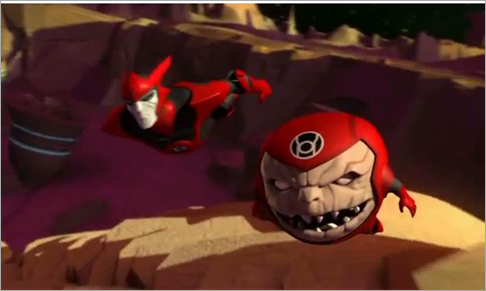
Here’s where the backstory kicks in that propels this into an ambitious endeavour. These guys are Red Lanterns—a ‘Lantern Corps’ that only recently appeared in the Green Lantern publications by DC. These are new ideas from comics being translated into television. Hyperaccelerated creative syncretism. The television industry is rigid. This doesn’t happen often. But, the creative minds behind this project—Sam Register (one of the big guys at DC animation) and Bruce Timm (the Stan Lee of DC’s animated properties) propped these characters up as golden for the show.

Boy, were they right. Not only do the concept of Red Lanterns fit perfectly and easily into the structure of the plotline, they retain their thematic value from the comics—for the hardcore fans, that’s major points. They seem natural, even if we’ve never seen them before on the screen. They’re even new to the Green Lanterns who first battle them, Kilowog’s on the same boat as the audience is. But he’s intrigued by these raging, blood-vomiting vengeance seekers, and so are we.

Most of the debate beforehand came from the approach that the animation style was way improper for the content of the show. After the impact of Justice League, helmed by Bruce Timm in the early 2000’s, his set style as lead animator paved the way for all comic book animated properties to follow. With this foray into CGI, heads were shaking. I can see where they’re coming from, but the argument me and many others have made in support, is the ‘why not?’ aspect of it.

image

If this is Green Lantern, the source of their power is two-fold, willpower to wield the green energy in their rings, and the imagination required to utilize it. GL’s can create anything with their minds—it’s all just light from a ring. In a 2D world, sure, that would look fine—but Bruce Timm’s already done 2D worlds, three times over. The change is a chance for the team and for this show. The producers consciously decide on this creative direction because it’s a way to separate and diversify a visual style.

But most people just want a pretty cartoon. Well, for you guys, it’s sleek, polished, and clean. The influences from The Incredibles and  stylistic throwbacks to early CGI like Toy Story, as my friend compared it to (although with negativity attached) aren’t attempted to be hidden behind embellishments. It’s simple and shiny. It’s Timm’s style made into three dimensions, and the eyes just have to adjust a little.

image

image


This is seen in those character designs of our two other, non-comic Green Lanterns that act as the plot points that push the story forward. This is where the writing comes in and adds a layer of sophistication that’s desired so much as a formula for success. The fast version: they have depth. They’re not beats on a script for our leads to have something to do. The story pushes character development for everyone, including these ‘one-offs’. They mean something by the end, as characters, and not footnotes.image

If you watch the episode, it’s an easy feeling to grasp onto—they’ll feel like more than caricatures, or mock-ups of what the other, more important guys feel like. They’re peers, not sideshow acts. They’re Green Lanterns, damn it. And as a result, it feels like a bigger universe ready to be explored in the future. Kudos to the writing team on that one.

Diversity in character weaves in with diversity of design—those alien looks are the traditional varied humanoids you’d expect from a space opera. Bottom line is, it’s cool—that should be one of the reasons you come to this cartoon. It presents itself within this visual style with elegance. Nothing’s overtly wonky with design and the look—static or moving. The digital lighting effects add those touches of detail, but their soft and implied, the presence is on the shapes and figures.

image
The animation side of it is the shaky area, you’d think, it’s handled beautifully here. The scarcity of detail in the look of the whole thing is an opportunistic decision. It allows for swift, fast-paced action that hits hard and keeps hitting, because our eyes don’t have to wander too long. It’s easy on animators and pleasing to my eye. The clean-cut nature of it allows for denser, faster movement. And with the fact that these are guys using mind-made hard light weaponry, the cleanliness is a treat.

Plus, the believability of the whole thing is stemmed into the performances. The casting director, a veteran at the studio, casted it perfectly. The actors working on this are established (Lucius Malfoy among them), and their voices work synonymously with the animation. It’s probably my favourite part of this episode—having voices that fit the character. They sound like that in my mind when I flip through comic pages.

These guys aren’t scared either, or safe or cautious—like I said, they’re bold. They’ve introduced new characters, thrust viewers into an established world that they’re confident they can craft for us, and used the mythology cleverly enough that it works despite the preconceptions. That should get some respect.

Then again, these are super-experienced, seasoned veterans at animated television tactics, with a double major in superheroes and awesome. Why would they do more of the same? They’re pushing boundaries, getting new viewers, spreading awareness, and coming up with new ideas.

It’s a excitedly fresh move from these producers, and I’m down. I’m so very down.

“Beware My Power” can be found online everywhere, soon probably. The rest of season will commence Spring 2012. So you have lots of time to brood and reread this to convince you ten times more to watch it. Just you wait.

In brightest day, motherfuckers.

Saturday, November 5, 2011

Young Justice: Season 1 (2010-Present) | Review


image
Created/Produced by Greg Weisman & Brandon Vietti

The resurgence of the superhero genre in entertainment is certainly something to be excited about. Franchises like Spider-Man and X-Men began pushing for more presence on the big screen, while Justice League brought back almost everything that cartoons like X-Men: The Animated Series did for comic book properties in the 90’s. When I was growing up, there were only about three superhero shows to watch, and probably never at the same time.

Then, when the 21st century hit, I’m assuming the creative professionals in the field started to realize there was a market in people like me, and hopefully you. Justice League and Justice League Unlimited carried the weight of having a critically and commercially successful property. Then Teen Titans came along and reinvigorated the range of viewership that a superhero cartoon could attract. They were all great, and I wasn’t even a little kid—well into my teens, and I was still hooked on those characters.

So coming back to the animated comic book universes, after dipping my feet into the actual comic book universes, is a good feeling. To see how everything’s developed since the 90’s when I first got my childhood glimpse into those worlds, till now, when the demand and ability for animation to reach new heights is, well, higher than ever.

The premise of a show like Young Justice isn’t new. Like the names I just dropped above, superhero teams strike a cord with wide-eyed kids and nostalgic comic book fans alike. When the announcements for this series first hit the net, people were either screaming foul, or screaming it’s been done before. Little was there the notion that it could a breath of fresh air. And fifteen episodes in, that’s exactly what it’s become.

image

The show follows a new team of teenage heroes from the DC universe, not explicitly the Teen Titans, and not something you’ve seen together before. The roster consists of Robin (Dick Grayson), Aqualad, Kid Flash (Wally West), Miss Martian, Superboy, and Artemis (Tigress in the DC Universe). Existing on what the producers call Earth-16, as in not the actual main DC Universe, the show features many familiar DC characters amidst a slew of classic villains that the team has faced since their pilot episode.

The problem with team-based anything from a production standpoint is establishing distinct characters that the viewer has to care about, and especially in a superhero cartoon, those characters have to balanced both narratively and with their action. This is where my biggest praise comes to this show. As it’s travelled from pilot episode to where it is now, the character development has been nothing short of phenomenal, and it culminates in the most recent episode, “Failsafe”, which many fan sites, and critics, are citing as the best episode of the season.

When you compare it to a show like Teen Titans, the levels of competency in establishing and fleshing out character relationships is on par with is predecessor. The archetypes are played with throughout the season, keeping it direct and accessible to its demographic, yet there’s enough substance for even older viewers to latch onto. At least that’s how I see it. Teen Titans was aimed at a pre-teen crowd, while Young Justice’s more ambitious visuals and older characters are to attract the more mature teenage audience. With that, the producers understand the necessary steps to take in order to present their characters. They know their stuff.

image

The examples can be found if you dedicate yourself to watching the show. I’ll admit, it’s kind of a rocky start from the beginning five or so episodes, but the over-arching plot and classic cliff-hangers sure do give enough incentive to come back. But, it’s the characters that are at the core of the show.

The voices, while at the start of the season, may seem even grating to some (it did to me for a while), they collectively pull of convincing teenage tones. Each cast member brings a vibe to their voices that helps distinct personalities from one another, that only builds upon the strength of character for Young Justice. They have a pretty good writing team to work from too, including comics great Peter David on board. The plot they’ve hashed out, that recently has finally reared its head, is worthy of a fist-pump, but still, the crew has taken the narrative for this team in new directions.

image

They work with an established universe, and distil it into how a team of kids fighting for validation are slowly becoming the centre of it. It’s the ultimate fantasy for any teen watching it. I find myself now hooked on seeing how they triumph too.

An equally praiseworthy element of the show is the extensive action that it packs into every episode. Again, like Teen Titans, this one’s got its fair share of fights. While the stylistic choices of Teen Titans were very angular and simple, Young Justice finds its stride in the incredible movement it puts into its sequences. And the costume designs are a kicker—they’re a chance to see familiar faces in different outfits—perfect for the comic book geek (stop whining, haters).

image

image

The animation is headed by an overseas production company, MOI Animation Inc, in collaboration with Warner Bros. Animation studios. The combined effort gives, if anything, a satisfactory amount of superhero badassery in showcasing all the talents of the team members, including the antics of the 150+ other characters that have shown up since the premiere.

From the episode “Downtime”. Atlantean fight scene. Excuse the lame opening.

The acrobatics of Robin, the dynamics of Artemis’ archery, digital effects showing off Miss Martian’s abilities, Kid Flash’s speediness, and Aqualad’s water constructs are all juicy visual treats that any kid, and any adult, can get down with.

If the witty quips from Robin or the catchphrases from Miss Martian throw you off, their battle sequences will get you back on, trust me on that. It’s got the features you want, and the cameos a show like this needs. There’s something for everyone.

So if you want to ignore the challenge of writing team-based superheroes on television, and that Young Justice achieves its goal in representing them in a way that works (wait till you get to “Failsafe” to see that in action), then the impeccable animation should hook you in for when the series really gets rolling. It’s worth the wait.

This is a show for a comic book fan, or a comic book cartoon fan, if you want to get back the nostalgia from the 90’s or just miss Teen Titans and all its glory. Give it to your kids to watch, and watch it with them cause it will probably hook both parties.

There’s enough in this show to quell the fears of doubters who seem weary for another superhero cartoon, but really, where else can superheroes be successful off the panel? Young Justice is doing its fair share of introductions into comic book universes for potential fans, and that gets my respect any day.

Don’t do a disservice to comics and superheroes and the fantasy of capes, go watch Young Justice.

image